


Advancing Fertility Care Through Sharing Innovative Research and Thought.
This site is for patients, healthcare providers, and researchers interested in understanding fertility and using the most effective fertility care possible. This includes decreasing costs associated with diagnosis and treatment of infertility as well as increasing the success of fertility treatments.


Advancing Fertility Care Through Sharing Innovative Research and Thought
META IVF stands for Most Effective Tactics Available for In Vitro Fertilization. In Vitro Fertilization (IVF) means combining eggs and sperm in a laboratory to make embryos which are later transferred to the uterus.
This site is for patients, healthcare providers, and researchers interested in understanding fertility and using the most effective fertility care possible. This includes decreasing costs associated with diagnosis and treatment of infertility as well as increasing the success of fertility treatments. A big important part of effective fertility care is avoiding use of costly products and services that have no actual benefit.
You might be wondering what is the need for a site like this? The main need is to provide accurate information in an unbiased fashion. Much of the information on fertility testing, treatment, and research is driven by for-profit companies that are financially invested in selling a product or service.

About Meta IVF
META IVF was started in 2025 as a fertility thinktank by Dr. Michael Awadalla to provide a space to share, present, and discuss best practices in fertility care. Dr. Michael Awadalla is a specialist in reproductive endocrinology and infertility who practices at the Institute for Reproductive Health in Cincinnati, Ohio.

Frequently Asked Questions
-
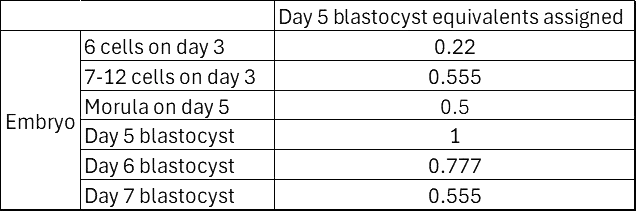
Day 3 embryos (often called cleavage stage embryos) are graded by cell number. Day 3 embryos with 6 or 7 cells are fair quality while those with 8 or more cells are good quality.
Day 5, day 6, and day 7 embryos are graded by embryo size (expansion stage), and the appearance of the inner cells (inner cell mass) and the outer cells (the trophectoderm). Embryo stage is usually given a number from 1 to 6. The inner cells and outer cells are usually given letter grades from A to C.
-
Although ICSI is more consistent overall, some patients with good sperm quality get many more embryos with conventional insemination than ICSI. Higher sperm concentration and sperm morphology favor conventional insemination over ICSI. Approximately 70% of patients do better with ICSI and 30% do better with conventional insemination.
While sperm quality gives some insight into the best method of fertilization, much of the IVF outcomes based on fertilization method are unpredictable.
The live birth rate for an embryo is the same for embryos created with ICSI and those created with conventional insemination.
-
This depends on several factors including the experience and skill of the IVF laboratory, embryologist performing the biopsy, and the genetic testing company that analyzes the biopsy. In general, higher follicle counts and higher age at oocyte retrieval favor PGT-A testing. PGT-A is an evolving and improving technology and there are many details that go into the analysis of cost, risk, and benefit.
-
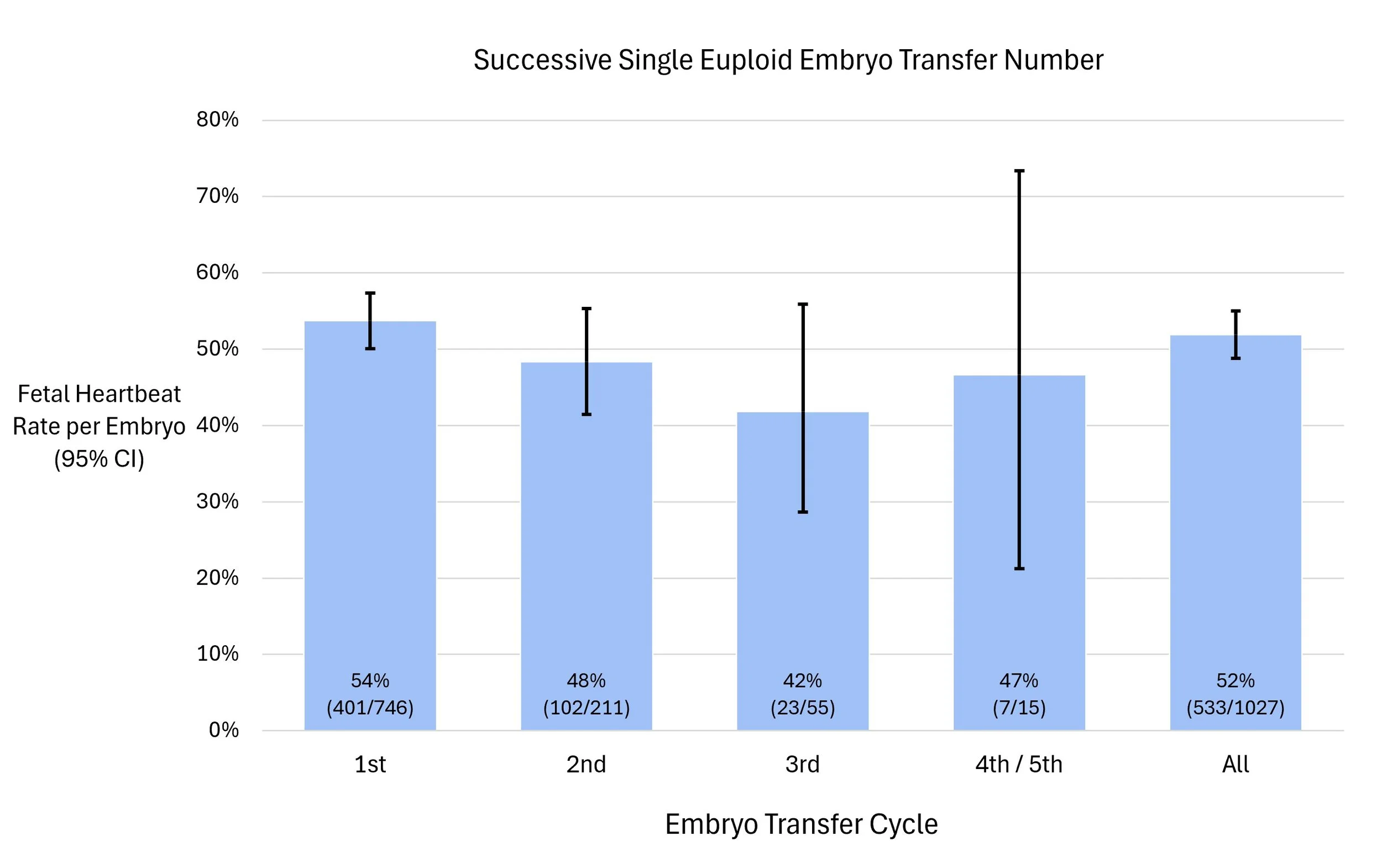
Although there may be some loss of implantation from embryo biopsy, ongoing pregnancies do not seem to be affected. When most clinics started performing embryo biopsy around 2015 the live birth rate for a euploid embryo was only 30-40%. Most clinics currently see a live birth rate per euploid embryo of 50-60%. This likely represents improved biopsy technique and more accurate PGT-A testing.
If there is no impact on the embryo from biopsy then a live birth rate per euploid embryo of approximately 70% would be expected.