
Number of Embryos to Transfer at One Time
In general, transfer of one embryo at a time is best and will result in 1.5% of pregnancies being twin pregnancies (1). In health women above age 35 or with low quality embryos transfer of more than one embryo can sometimes be a reasonable cost effective approach. When more than one embryo is transferred at at time it is best to aim to have a twin rate (percentage of ongoing pregnancies resulting from an embryo transfer that are twins) of 20% or less and a triplet rate of less than 1%. The tables below can be used to predict the rate of twins and triplets after transfer of more than one embryo (2).
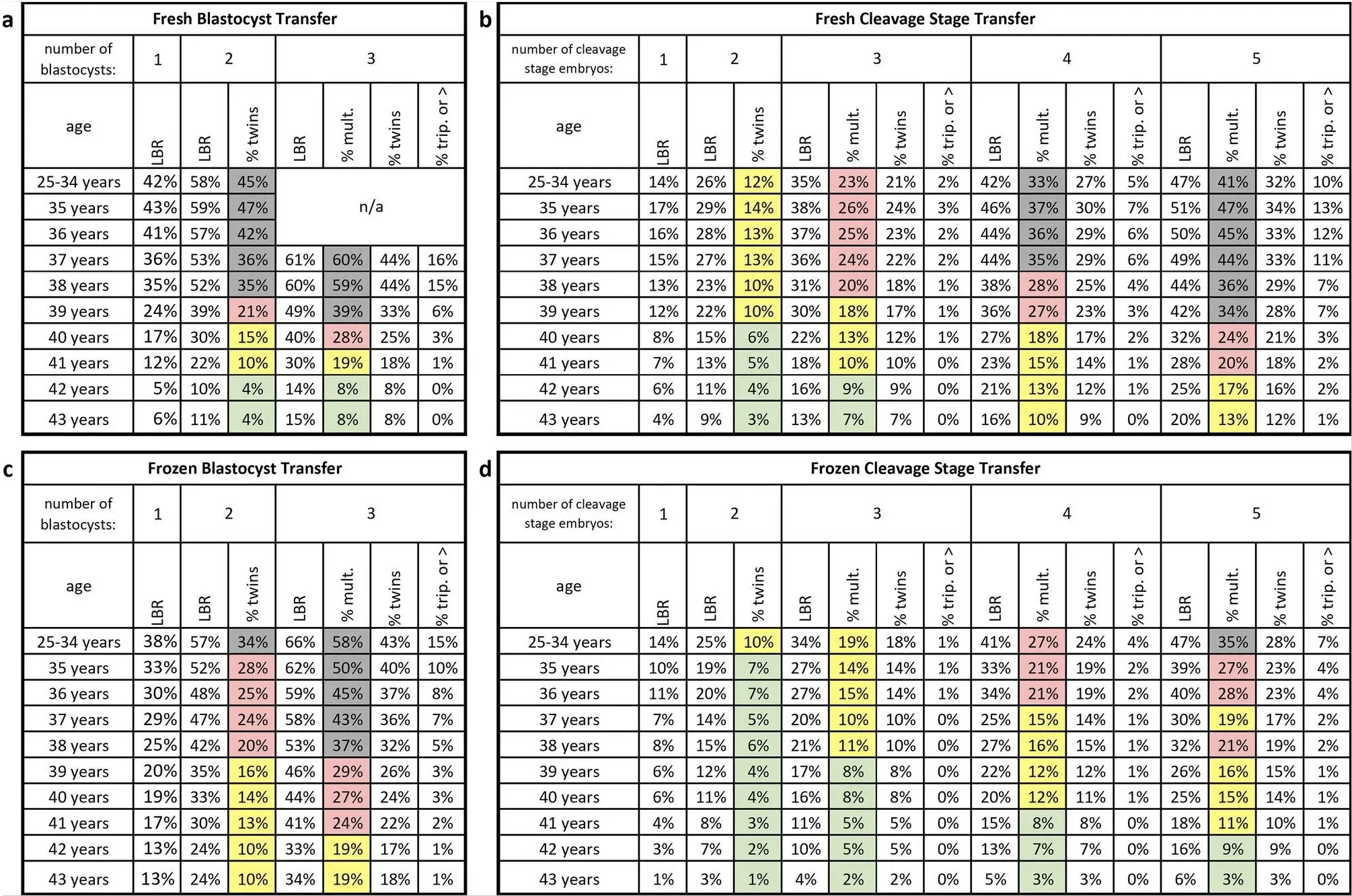
Figure 4. Predicted outcomes for (a) Fresh Blastocyst, (b) Fresh Cleavage Stage, (c) Frozen Blastocyst, and (d) Frozen Cleavage Stage Embryo Transfers. The multiples column results are shaded green, yellow, red, or gray to indicate the risk of multiples at delivery (0–9%, 10–19%, 20–29%, or ≥ 30% respectively). LBR, total live birth rate per embryo transfer; % mult., percentage of live deliveries that are multiples; % twins, percentage of live deliveries that are twin deliveries; % trip. or > , percentage of live deliveries that are triplets or greater.
